
Artificial intelligence is now one of the biggest forces shaping where the world’s capital goes, how economies grow and how companies are organized. Spending on AI infrastructure has reached a scale rarely seen in business history, while the measured economic payoff is still catching up.
This article looks at the numbers behind the AI investment boom, what it means for economies and employers, the risks, and the practical steps business leaders can take. The figures below come from company earnings guidance and recent research, and they change quickly, so treat them as a snapshot of late 2026.
Where is the money going?
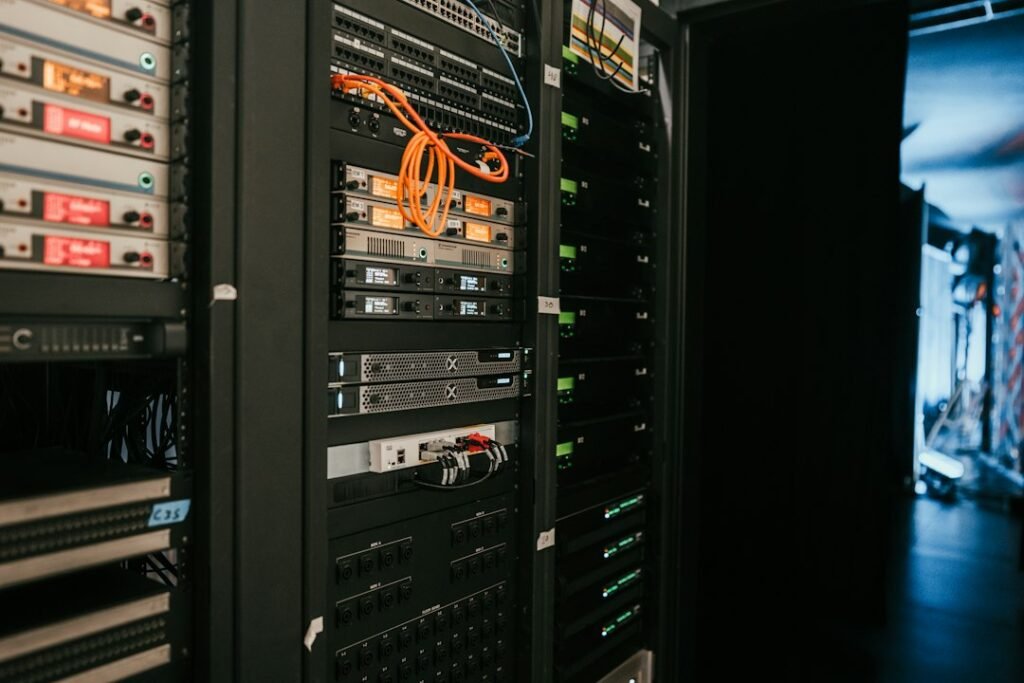
The clearest signal is the spending of the largest cloud companies. Amazon, Alphabet, Microsoft and Meta, often called hyperscalers, have each guided to record capital spending for 2026. Industry reporting based on their mid-2026 earnings puts their combined plans at roughly $720 billion to $745 billion for the year, up from forecasts of around $650 billion earlier in the year. Most of it goes to AI data centers and the equipment inside them.
Industry analysts describe where it goes:
- Chips and computing hardware. A 2025 McKinsey study cited by The Motley Fool estimates that chips account for roughly 60% of AI data center spending, within a projected $5.2 trillion of AI spending through 2030.
- Buildings, power and cooling. The remainder pays for construction, power systems, cooling, networking and land. U.S. Census Bureau data shows private data center construction spending running at an annual rate of about $96.5 billion in September 2026 on a preliminary basis, nearly four times the level of December 2023.
- Energy. Power is becoming a limiting factor, and large technology companies are signing deals for nuclear, geothermal and other dedicated power. Moody’s has projected about $3 trillion of global data center spending over the next five years, and notes that power grids cannot be built at the same pace.
Beyond the big four, Dell’Oro Group estimates that total data center capital spending reached about $726 billion in 2025 and expects it to pass $1 trillion in 2026.
Why are companies investing so heavily?
Three forces stand out. First, demand for AI computing is growing faster than available capacity, and new capacity takes time to build. Second, large companies are competing to secure chips, power and sites before rivals do. Third, governments and businesses increasingly want AI workloads processed locally, which drives data center investment in more countries.
Economic shifts: big investment, modest measured gains so far
Investment is already visible in the economy. One Wellington Management analysis estimates that AI-related capital spending reached about 1.7% of U.S. GDP in the first quarter of 2026. Stanford’s 2026 AI Index reports that global corporate AI investment more than doubled in 2025.
The productivity payoff is real but uneven. The Stanford AI Index summarizes studies reporting gains of about 14% to 15% in customer support, about 26% in software development and about 50% in marketing output, with the largest gains in structured, measurable work. Oxford Economics, however, expects AI to add only a few tenths of a percentage point to U.S. GDP growth over the coming year, because most firms use AI for just a few business functions so far.
A Federal Reserve working paper based on a survey of nearly 750 corporate executives found positive productivity gains that vary by sector, strongest in high-skill services and finance. It also described a productivity paradox: perceived gains were larger than measured gains, likely because revenue effects take time to show up.
Corporate transformation: from experiments to new ways of working
Adoption is now widespread. The Stanford AI Index reports that 88% of surveyed organizations were using AI in 2025, and that generative AI reached 53% adoption within three years, faster than the personal computer or the internet. But depth matters more than breadth. Oxford Economics found that more than two-thirds of adopting firms use AI for only a few functions, most often sales and marketing, strategy and IT, and the Stanford report notes that AI agent use is still early.
The effects on work are starting to appear:
- Job reshuffling more than mass job loss. The Federal Reserve paper found little evidence of near-term overall job declines, but described shifts within and across companies, with routine clerical roles declining and demand for skilled technical roles rising.
- Expectations of change. According to the Stanford AI Index, about one-third of organizations expect AI to reduce their workforce in the coming year, even though large-scale job losses have not yet shown up in overall employment data.
- Pressure on entry-level roles. The same report notes that employment for software developers aged 22 to 25 has fallen by nearly 20% from 2024, a sign that early-career workers in AI-exposed fields may feel the change first.
Risks and open questions
- Return on investment. Bloomberg reported that investors grew more cautious as spending forecasts rose, with some company shares falling after the announcements. The revenue to justify this level of spending has yet to be fully proven.
- Bottlenecks. Competition for chips, electricians, construction materials and power can delay projects and raise costs.
- Concentration. A small number of companies control much of the new infrastructure, which affects pricing and access for everyone else.
- Uneven benefits. Gains are strongest in some sectors and for some workers, while others face disruption.
What should business leaders do now?
- Focus on value, not hype. Pick a few specific processes where AI can save time or improve results, and measure them.
- Go deeper in fewer areas. Depth of use beats a long list of shallow pilots.
- Invest in your people. Train your team to work with AI tools and redesign roles around them.
- Protect data and trust. Set clear rules for privacy, security and human review.
- Plan for infrastructure costs. Cloud pricing and availability are shaped by this spending wave, so review your options regularly.
- Stay flexible. The technology and the economics are changing fast, so review your plans every few months.
For practical starting points, see our guides on AI tools for lead generation, how AI automation saves small businesses time and how to rank on Google in the AI era.
Frequently asked questions
How much is being spent on AI infrastructure?
Industry reporting based on mid-2026 earnings guidance puts the combined 2026 capital spending of Amazon, Alphabet, Microsoft and Meta at roughly $720 billion to $745 billion, most of it tied to AI and cloud infrastructure. Exact figures vary by source and change with each earnings report.
Is AI already boosting the economy?
AI-related investment is already a significant part of economic activity, but measured productivity gains are still modest and uneven. Research suggests the effect on overall growth is small so far, while gains are larger in specific tasks such as customer support, software development and marketing.
Will AI take jobs?
Current evidence points more to reshuffling than mass job loss. Routine roles are declining in some areas while demand for technical skills rises, and early-career workers in AI-exposed fields appear to be affected first. Forecasts are uncertain.
Is the AI investment boom a bubble?
Nobody knows. Some investors have voiced concern about the return on such large spending, while others point to strong demand for computing capacity. The outcome will depend on whether AI revenue and productivity gains catch up with the investment.
What should small businesses take from this?
You do not need to match big-tech budgets. Start with one practical use of AI, measure the result and build from there.
Sources
- Stanford HAI, AI Index Report 2026, Economy chapter.
- Oxford Economics, US AI tracker, May 2026.
- Federal Reserve research (Atlanta and Richmond), Artificial Intelligence, Productivity, and the Workforce: Evidence from Corporate Executives, NBER Working Paper 34984, 2026.
- Wellington Management, Productivity, prices, and profits: Mapping AI’s US trajectory.
- Datacentres.com and Data Center Knowledge (Bloomberg), reporting on 2026 hyperscaler capital spending.
- The Motley Fool, AI companies spending on data centers, citing McKinsey and U.S. Census Bureau data.
- Network World, reporting on Dell’Oro Group data center spending estimates.
Need help applying AI in your business?
Our team helps businesses choose and set up practical AI and automation that fit how they work. Learn about our AI and workflow automation service or book a free strategy call.

admin
Part of the TechGrowthAI team, sharing practical ideas on marketing, technology and growth.
Related articles

Tech News November 2026: What It Means for You
The biggest tech stories of November 2026, from a record crypto hack to AI in everyday devices, and what each one means…
Read article
AI Tools for Lead Generation: A Practical Guide
Learn which AI tools help businesses generate leads, how to adopt them step by step, and how to turn your blog into…
Read article